Lessons from the Southern Oregon Coast
It’s hard to describe what it’s like exploring the Southern Oregon Coast. Yes, there are sandy beaches, popular scenic viewpoints, and hiking trails. All the things you’d expect to find along the People’s Coast. But, it’s also a place the eye can’t quite comprehend. It’s overwhelming to take in dramatic layers of craggy sea stacks, waves crashing through arched rocks in the middle of the ocean, the stone ribbon of Highway 101 curving up a hillside in the distance.
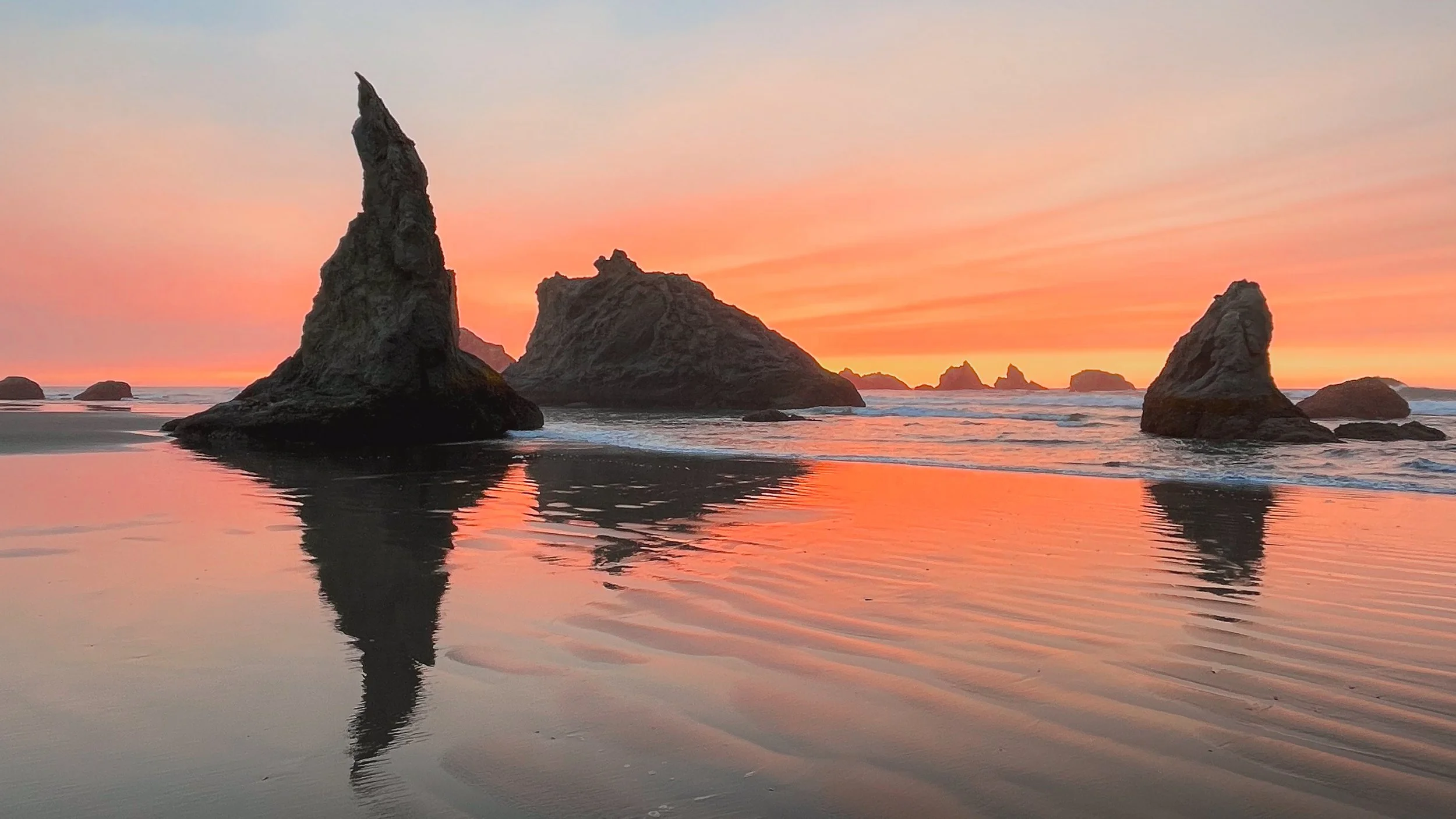
The first time I traveled to the Southern Oregon Coast, I had owned my big girl camera for all of a month. I was fearful of manual mode, didn’t fully understand exposure, and was frequently disappointed at the flat nature of a RAW image. Still, I took hundreds of photos (on auto, of course) while I explored this stretch of coastline. I stopped at every viewpoint, every state park, and every wide shoulder I could find along Highway 101. The majority of the photos were not good (though I did capture my favorite sunset of all time as seen below) and I knew I would need to come back to photograph the region again.
About a year later, I made the trip back to the Southern Oregon coast. This time, I was confidently shooting in manual mode, had a grip on editing, and was really excited to take a second swing at photographing this region with something more substantial than an iPhone.
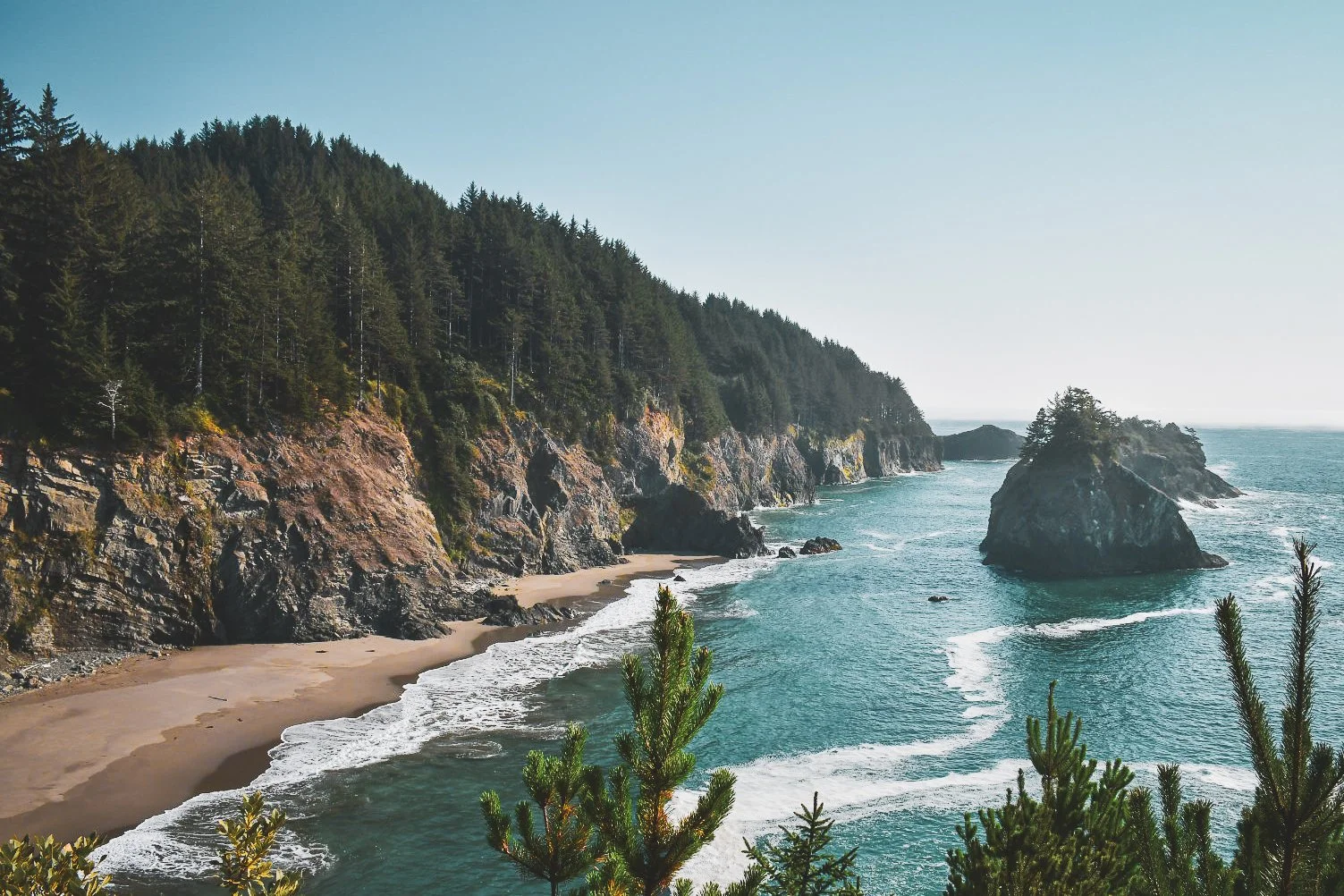
After grabbing an iced espresso at Bandon Coffee Cafe, I took off towards the Samuel H. Boardman Scenic Corridor just North of Brookings. If you are traveling South on Highway 101, one of the first scenic viewpoints you’ll come to is Arch Rock. While named for one of the arch-like sea stacks off in the distance, there are two additional beautiful viewpoints on the short loop trail. I had imprinted these views into my memory and couldn’t wait to see them again.
I pulled into the parking lot and noticed the clouds were low. This was good news. If you know me, you know I prefer rain, clouds, and fog over blue skies almost all of the time. With my camera looped around my neck, I walked to the first viewpoint and quickly realized my plans were going to change.
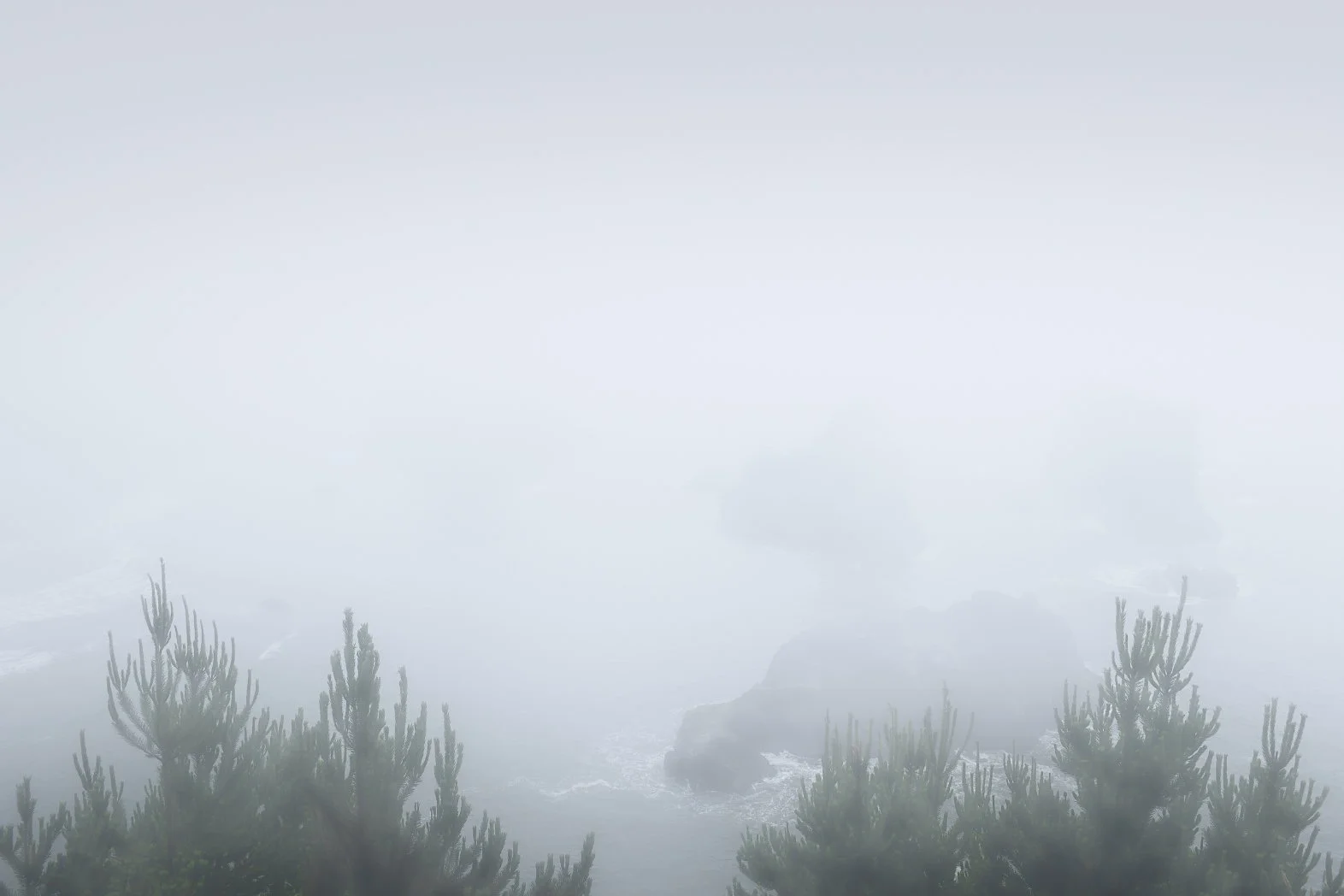
On this particular day, the day I was finally equipped to photograph the landscape as it deserved to be photographed… a wall of dense fog swallowed everything off-shore.
Beyond the trees and the railing 10 feet in front of me, I could not see the sea stacks I knew were there. I could not see the waves crashing against the cliffs, though I could hear them. I couldn’t see much of anything but a misty wall of white, like trying to see to the other side of a cloud.
I walked along the trail hoping for a faint outline of the viewpoint’s namesake. No luck.
I continued the loop to the viewpoint looking South. It was a little clearer, but not by much:
Almost by definition, the weather on the Oregon Coast is unpredictable. I’ve had days where the weather forecast called for straight up sunshine, only to arrive to thick, cold fog. I knew I could wait ten minutes and the fog might lift. Or it might not. Either way, it just was what it was.
Because I had been here before on a clear day, I knew there was an absolutely stunning view hiding in the fog. I could picture the scene. I could imagine the composition, the colors, the final photo.
In a sense, I knew what I was missing. I knew what my eyes could not see.
A few years prior to this moment, my life as I knew it collapsed and I was grieving the loss of the person I thought I was. I moved through each day numb, hollow, suffocating on failed attempts at healing. The despair persisted for years.
I could viscerally remember my life before everything fell apart. I knew lightness, joy, and ease. I knew clear and bright eyes. I knew belly laughs and beaming confidence. I knew potential. I knew how it felt to believe I was good and okay and all would be well. I carried the burdensome knowledge that a version of me, happier and whole, was just beyond my reach. I was a hostage to memories of myself.
To know something exists, but to find it inaccessible, invisible, and out of reach is maddening. And yet, to have known something once is its own kind of comfort. The knowledge something has once existed means it either still exists or can likely exist again. There is hope here.
When all I could see was an impenetrable white wall hovering above the Pacific, I knew without a shadow of doubt there was a whole world on the other side. Like the sea stacks cloaked in mist, when I could not see my whole self, some deep, reverent part of me knew I was still there. The core of my being stood resolute, hidden in the fog of a depression so thick only time could lift it.
As I type this, I am not in the throes of despair anymore. My bright eyes are wide open again, trained on the horizon instead of my memories.
Eventually, I returned to Arch Rock.
The sea stacks were there, just as I knew they would be.