Vancouver Island: A Quiet Kind of Wild
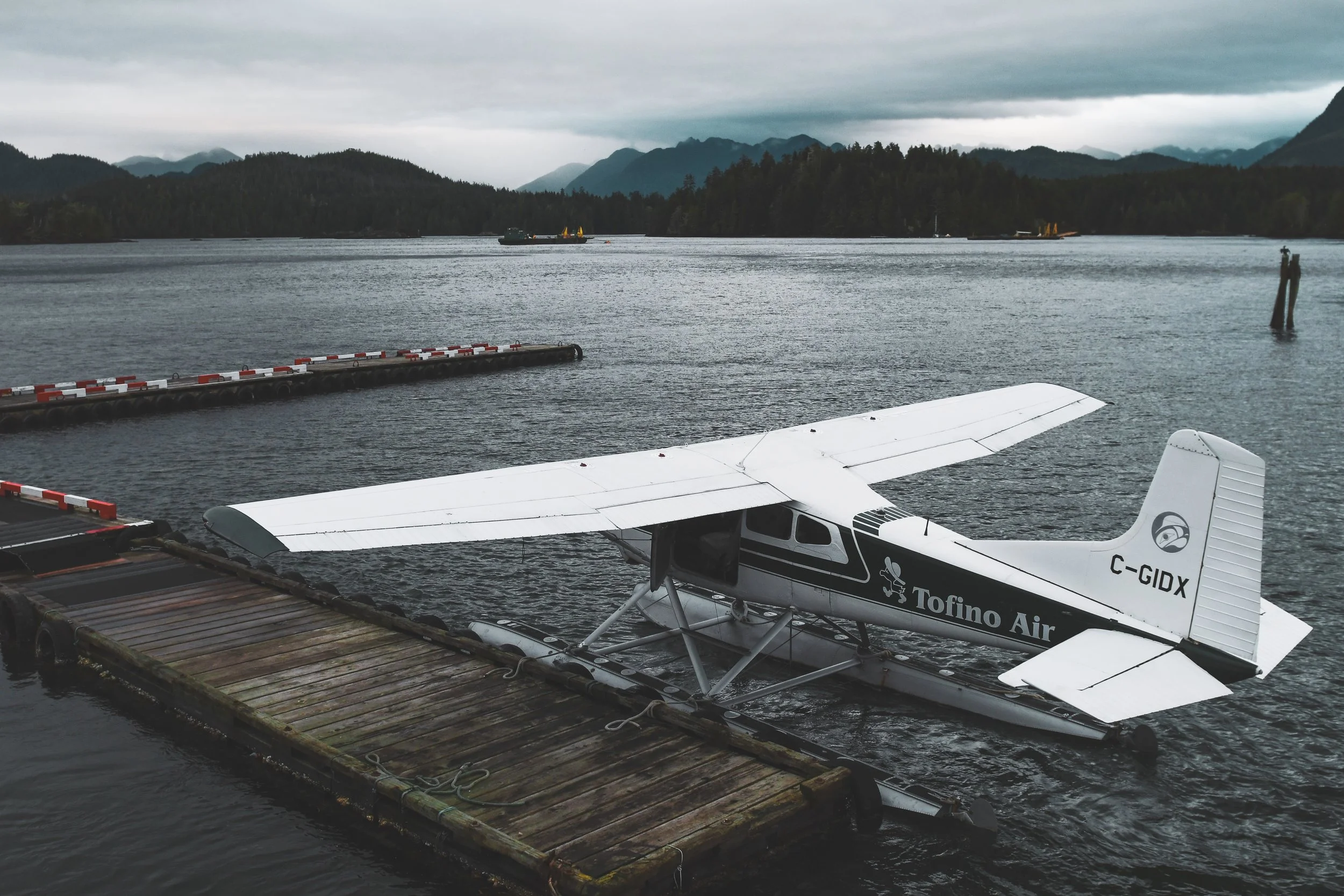
By November, the crowds had all gone home, the sun hid behind the clouds, and I felt like the only non-local in town. Coffee shops had ‘thanks for a great season’ signs on their doors and would not reopen until May. Parking was a breeze from one end of town to the other. There were no lines, anywhere. Tofino had returned to the sleepy, quiet, rainy town I had spent the last few years dreaming about.
The evening I rolled in to town, it was minutes before sundown. While the sky was mostly cloudy, the clouds were getting a subtle pink hue to them. I never miss a sunset when I’m on the road, so pulled into the first public beach I saw.
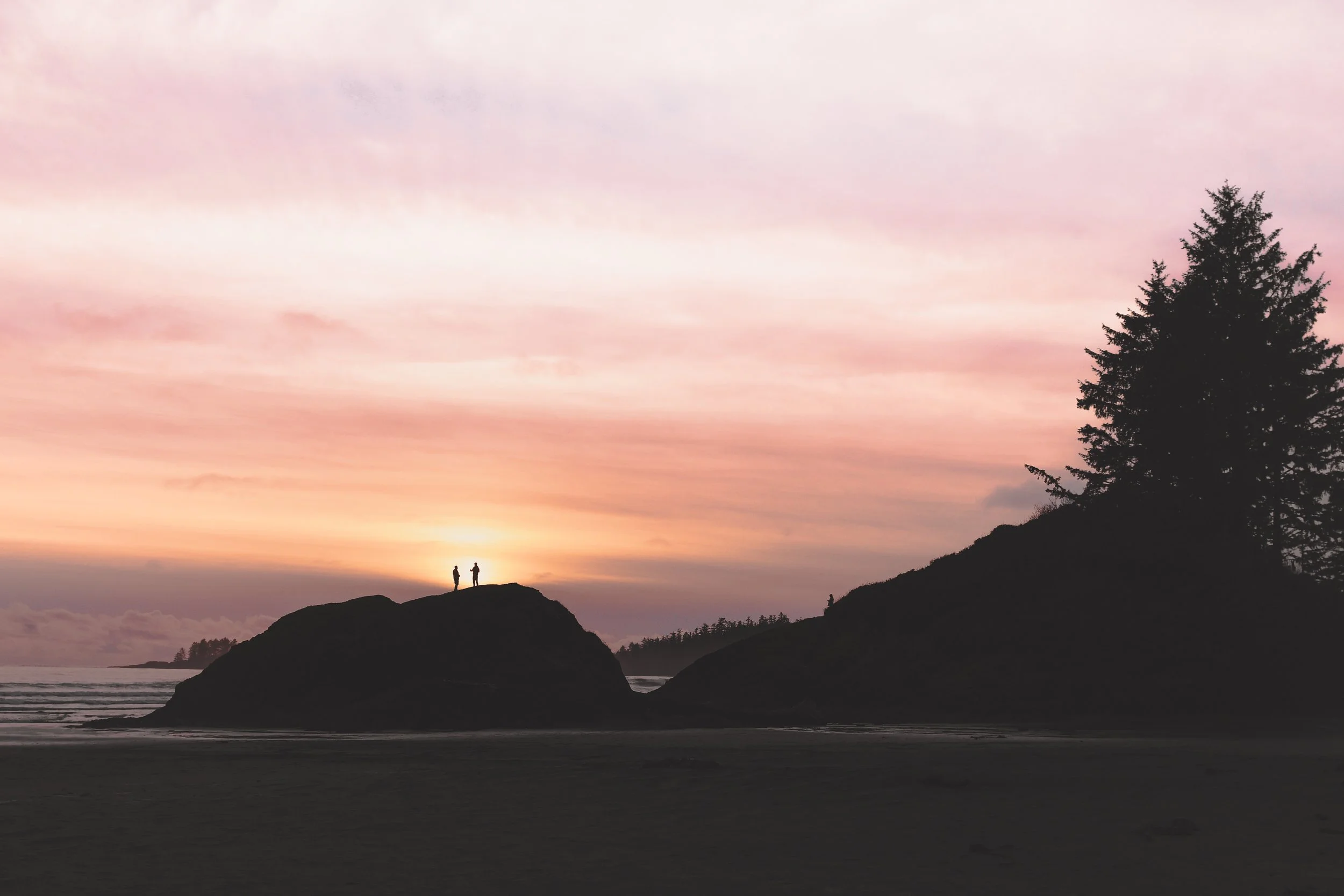
As I walked along the Long Beach shoreline, I relished each step. I finally made it to Tofino, a place I’d tried to get to for years. Down the beach, a couple people scrambled up the side of this huge rock. I moved so my camera, the people, and the faint glow of the setting sun were aligned. The backlit silhouette of these two humans made me wonder how many thousands of people had stood in that same spot and, even more, how many thousands of years ago did someone stand there for the first time.
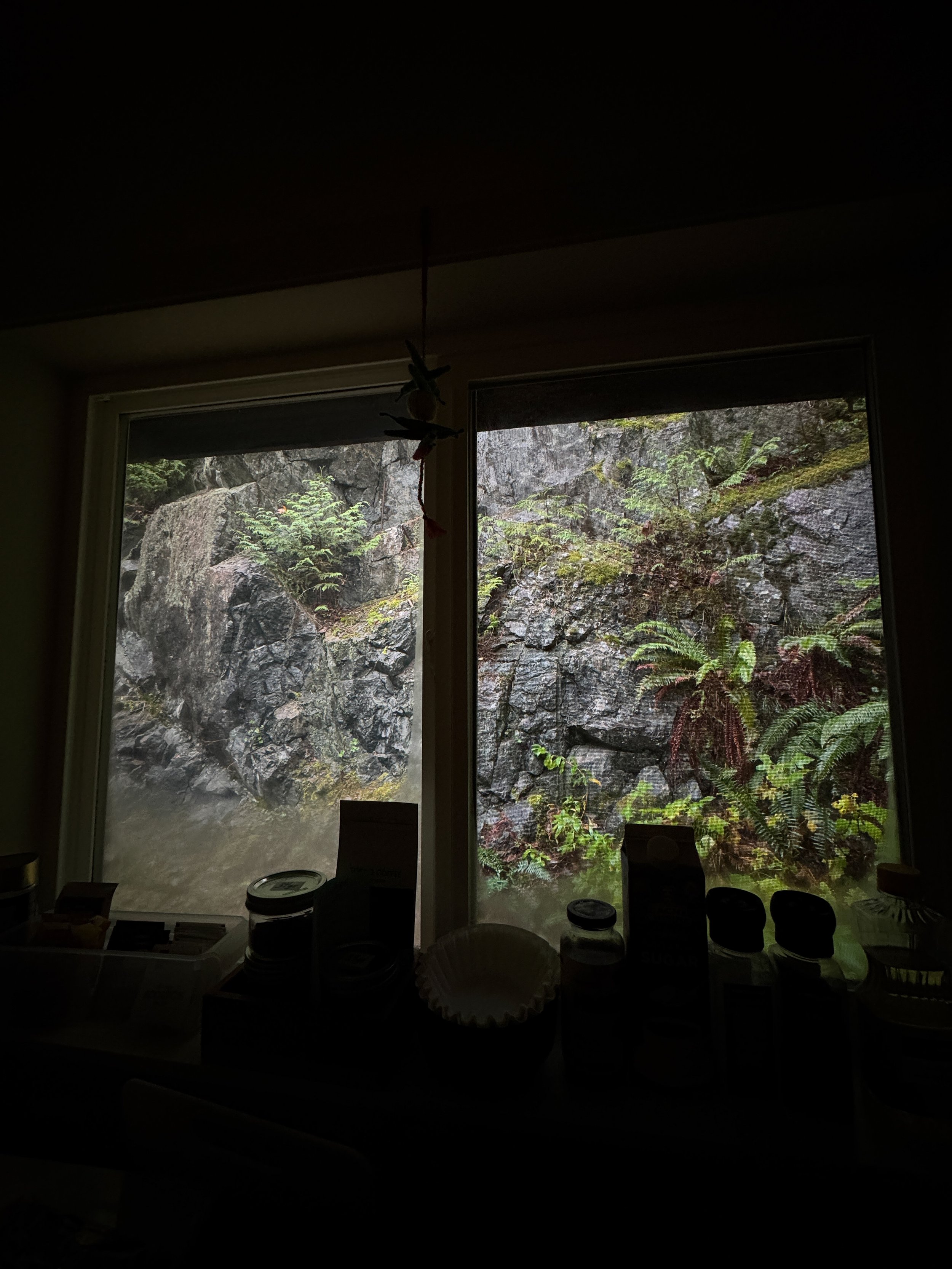
The next morning, I woke up in my Airbnb*. I arrived after dark the night before, so I didn’t have a good idea of the area around the home. My jaw dropped at the view out the kitchen window. A vertical wall of rock, adorned with a handful of ferns, was like a scene straight out of Twilight. In addition to the warnings I’d seen to look out for bears, cougars, and wolves, it was clear I would spend the next few days right on the edge of the wilderness.
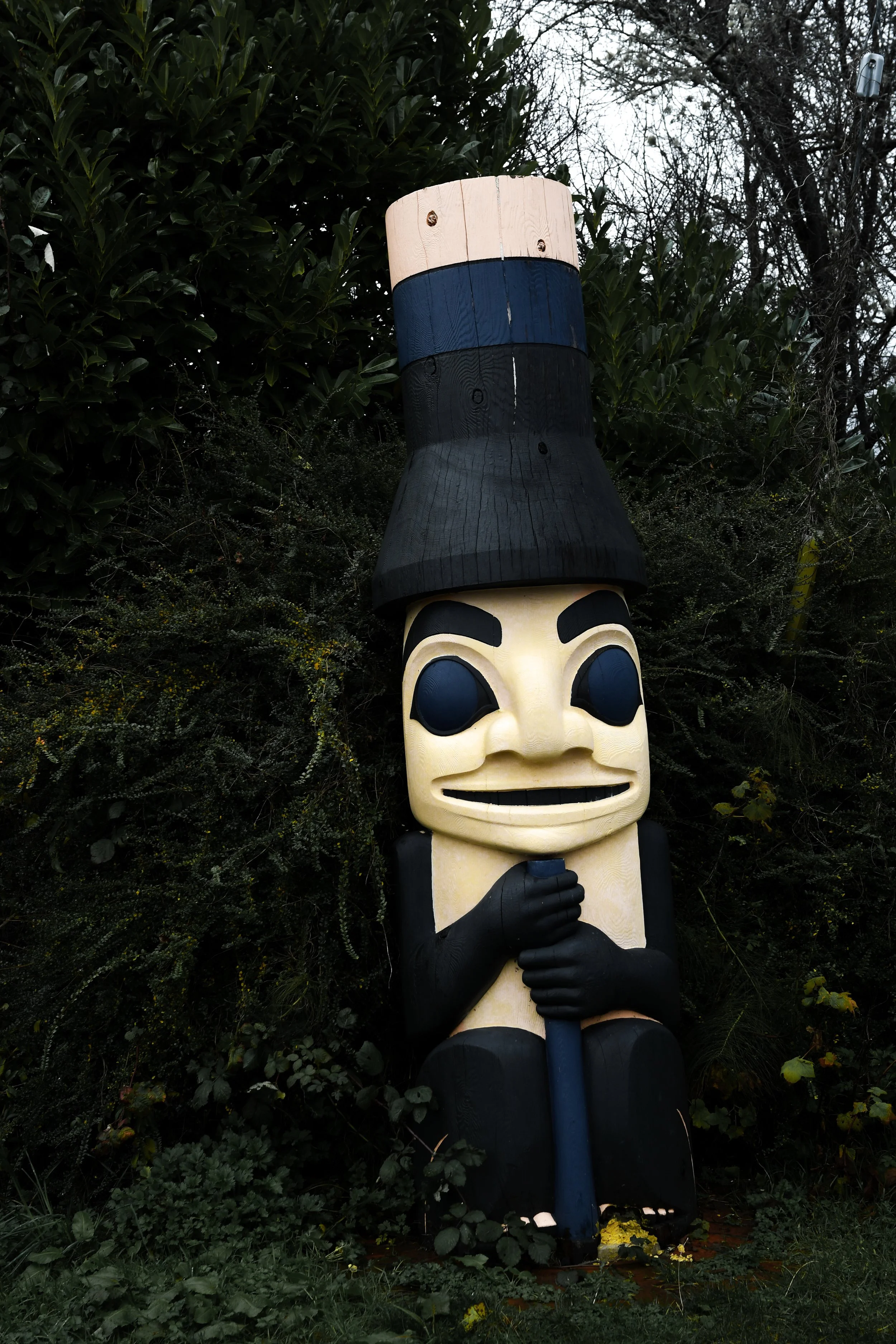
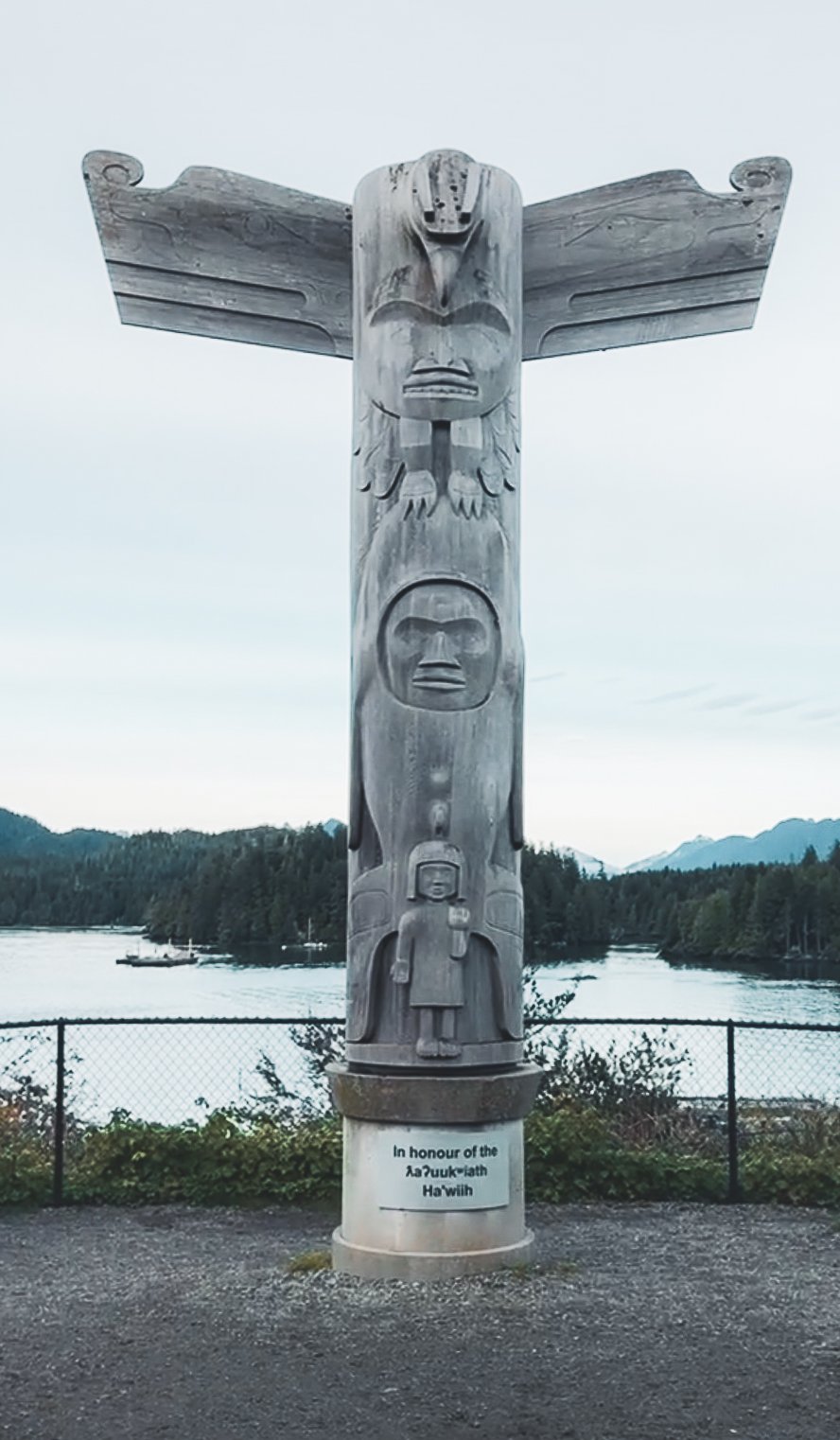
After a necessary stop at Rhino Coffee House, I wandered around for a few minutes sipping my iced espresso. Scattered throughout town are beautiful pieces of native artwork created by members of the Tla-o-qui-aht people, part of the Nuu-chah-nulth First Nations. I found a tiny viewpoint overlooking the water. A gorgeous totem pole created by Tla-o-qui-aht artist, Joe David, sat at the edge (source).
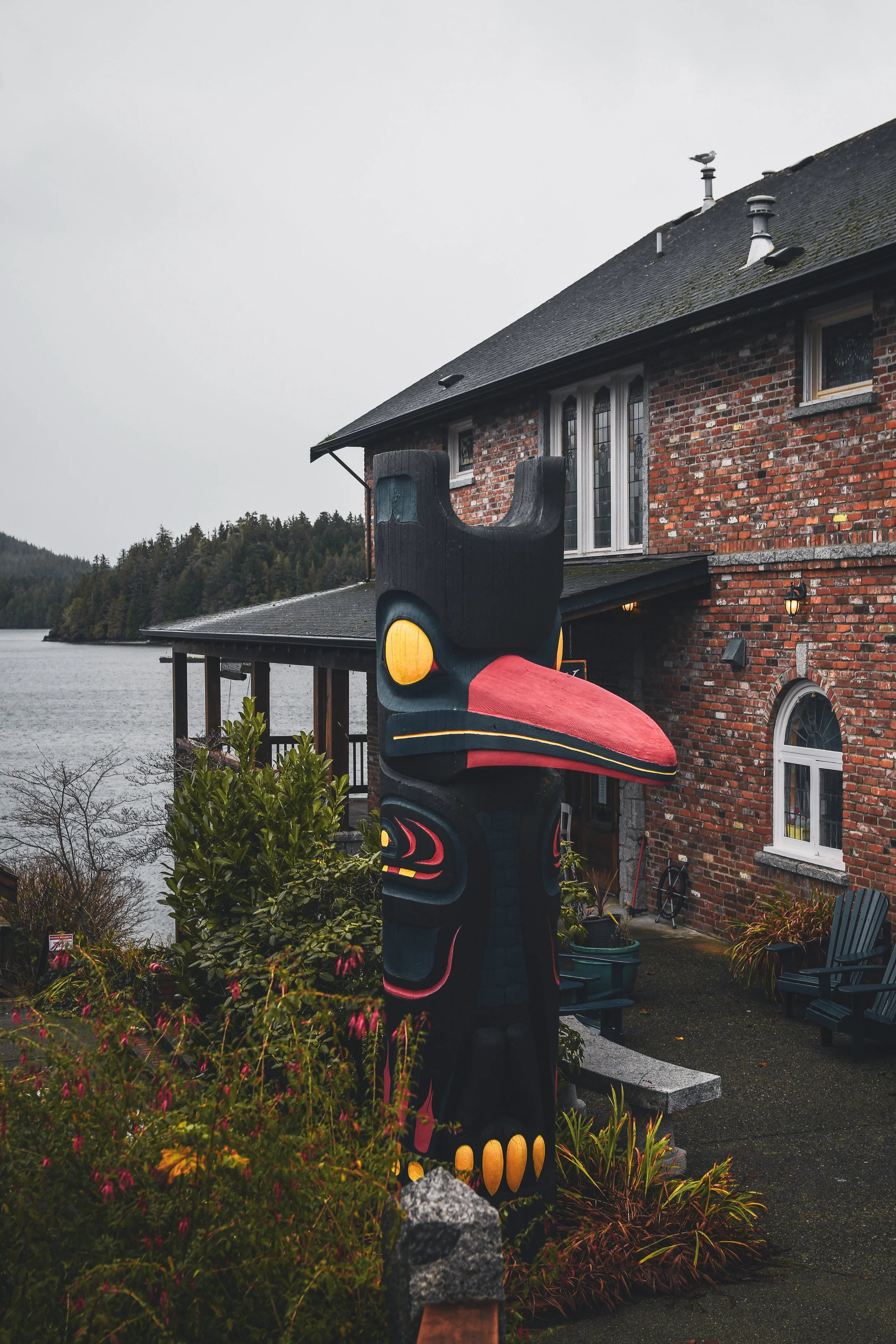
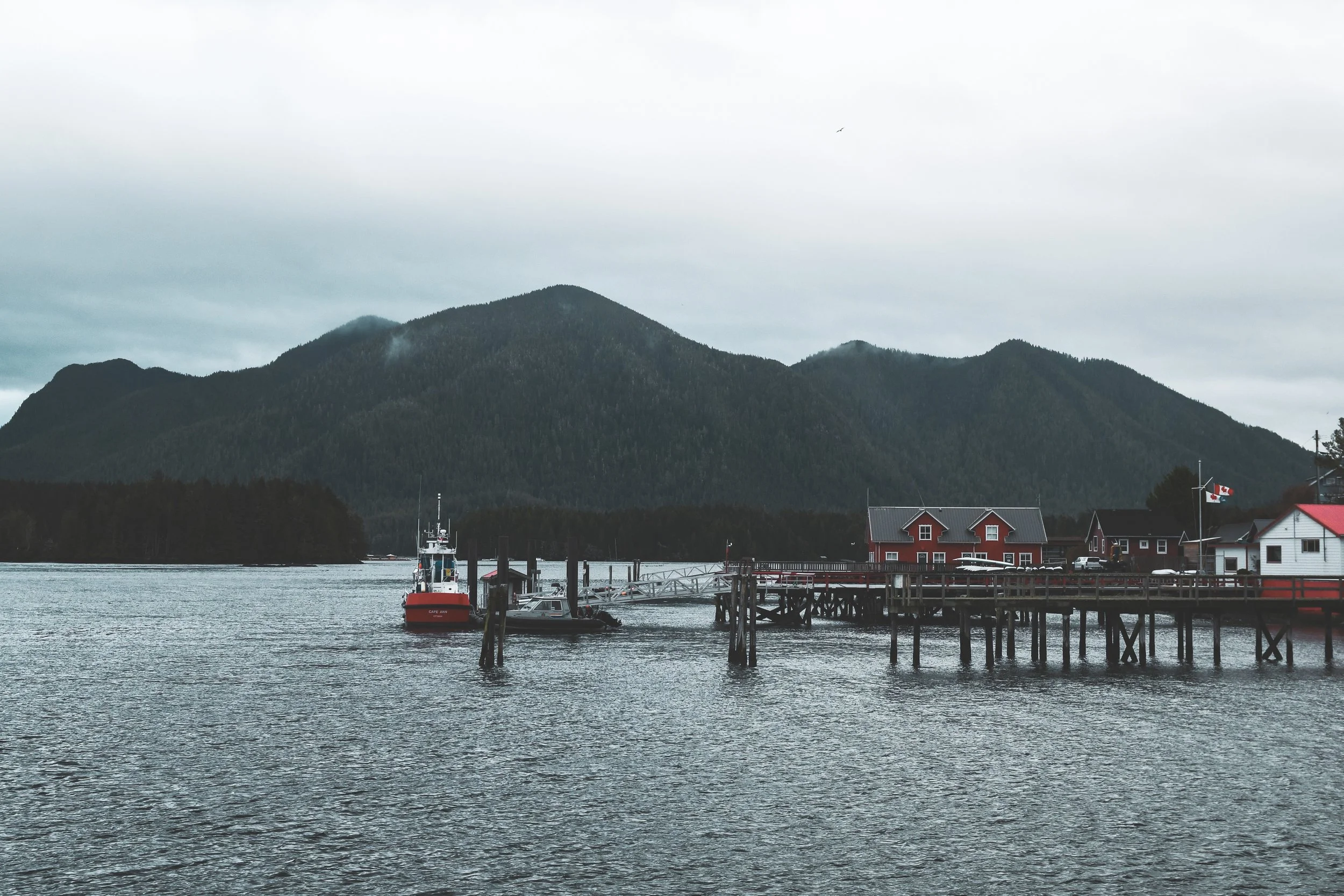
The view from the overlook reminded me of the San Juans. Calm stretches of water, only interrupted by tree-covered islands and the occasional sailboat. I have never quite pinned down what draws me to this specific kind of coastal landscape. I don’t know if it’s the deep shades of blues, greens, and grays. Maybe it’s the fact that I can’t walk to those islands to find out what untold mysteries they hold. It might be how quiet, still, and expansive the air feels. I like to think that in a former life, I lived in a place like this— wet, wind-battered, but beautiful.
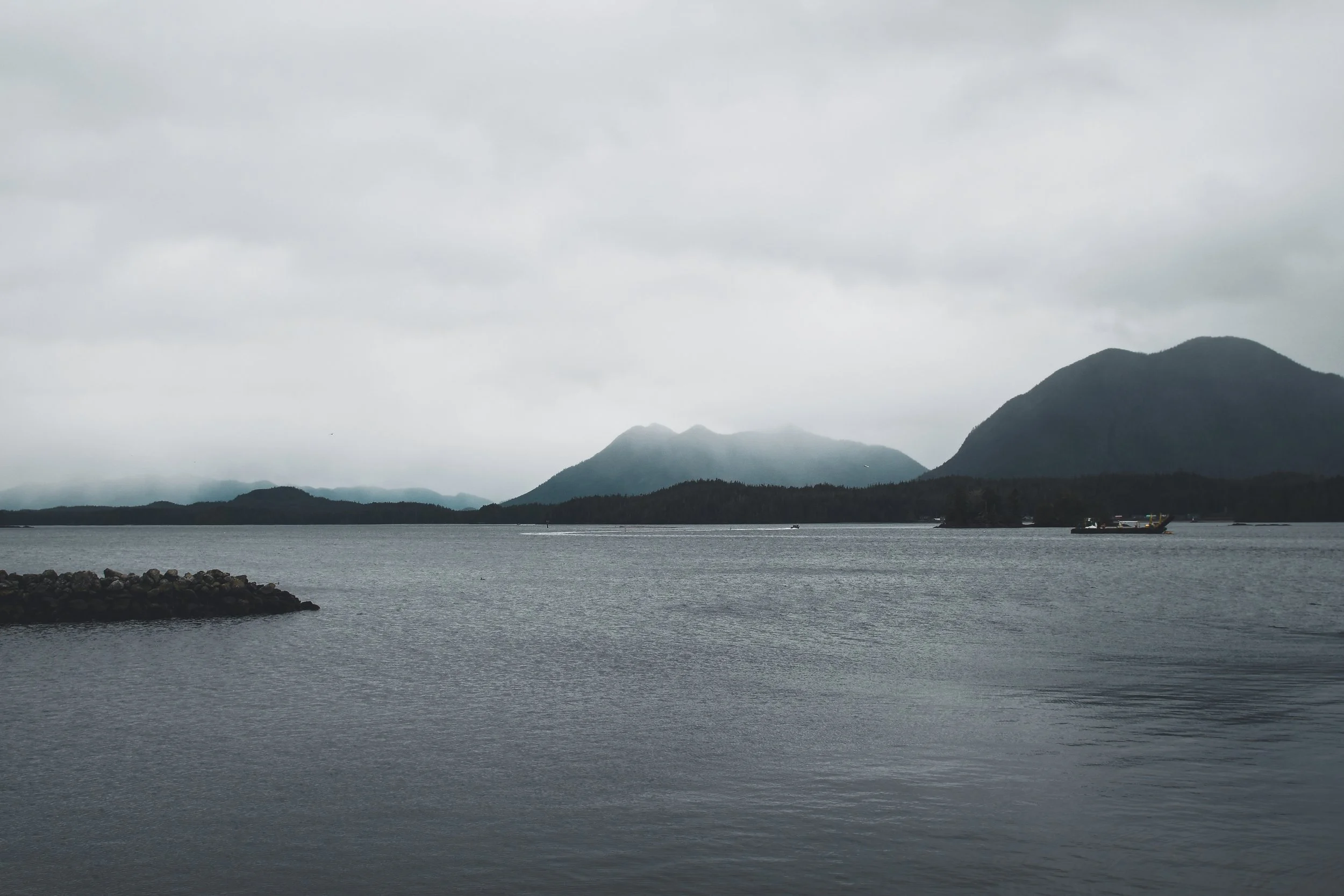
I could’ve watched the boats pass and the fog lift for much longer, but the pins on my Vancouver Island Google Map were calling.
Tofino sits at the far end of a peninsula accessed by a single two-lane highway. Since this was one of only two full days in this area, I planned to go to the spots farthest from town first. I followed the highway out of town for about 35 minutes, straight through Pacific Rim National Park Reserve, to reach Ucluelet.
Ucluelet, another coastal town on Vancouver Island, is even quieter than Tofino. There are fewer shops, fewer restaurants, fewer people. While I knew I was going to spend much of the day wandering the Wild Pacific Trail, a tiny beach caught my eye first and I pulled into the 4-space parking lot.
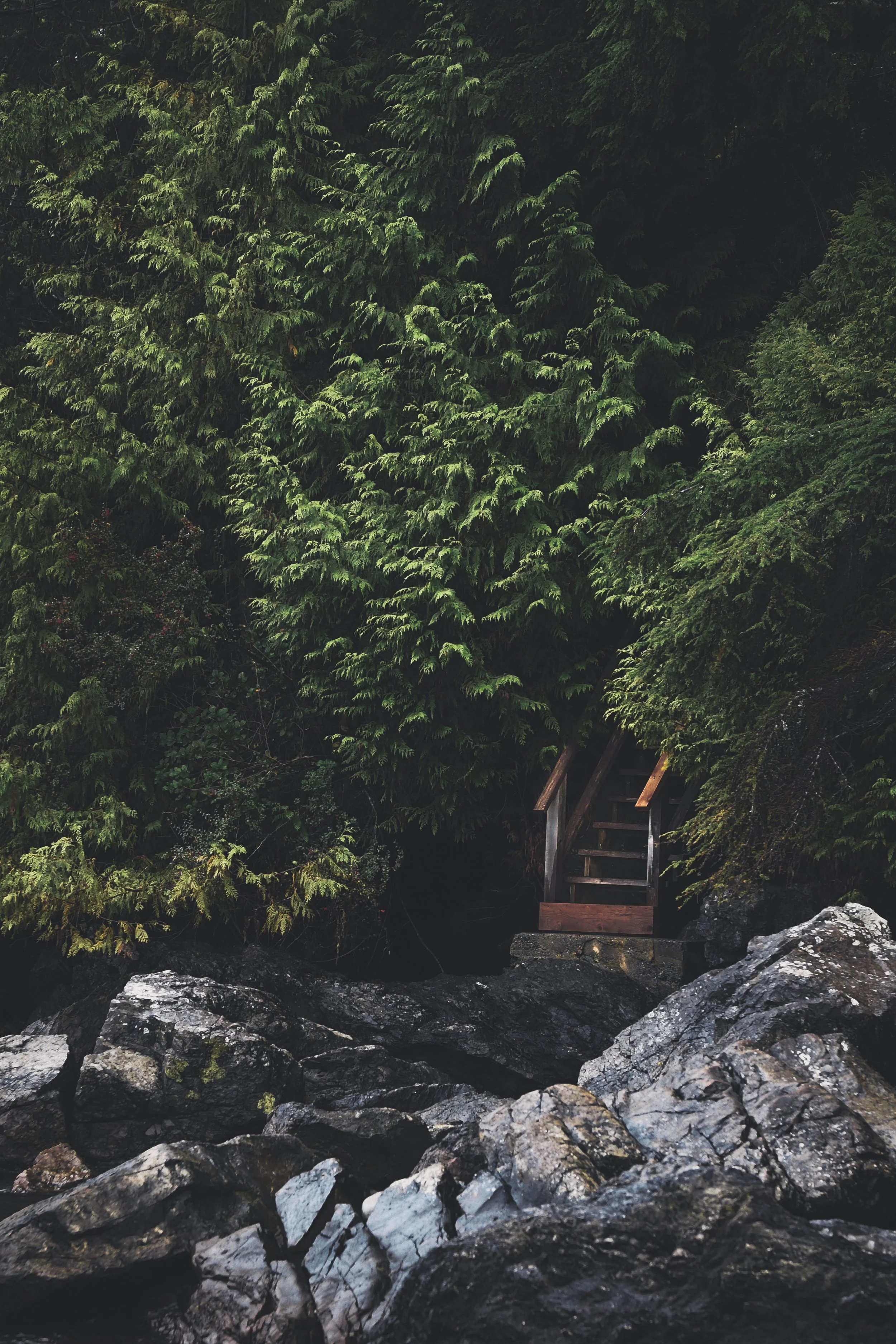
Aptly named Little Beach, this tiny stretch of shoreline sits in a narrow cove. Walking along the water’s edge, I picked up a few pieces of sea glass, took a few deep breaths to siphon some salty air into my lungs, and snapped a few photos. My favorite was this set of stairs seemingly descending from the trees onto the slick rocky shore.
The Wild Pacific Trail follows the edge of Ucluelet’s coastline. It is made up of a few separate sections totaling around 5 miles. While I would have loved to see the entire trail, I spent most of my time at the Lighthouse Loop.
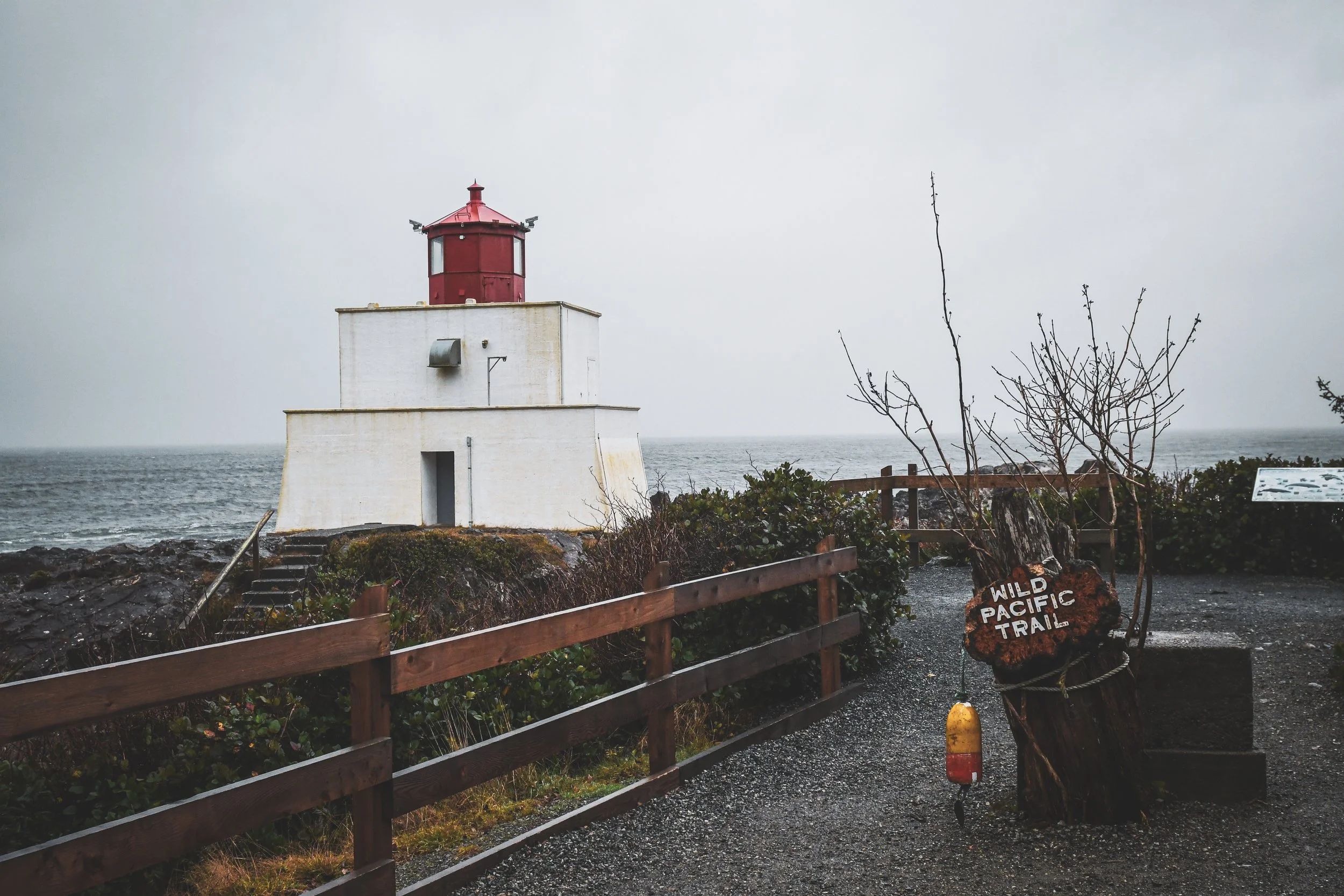
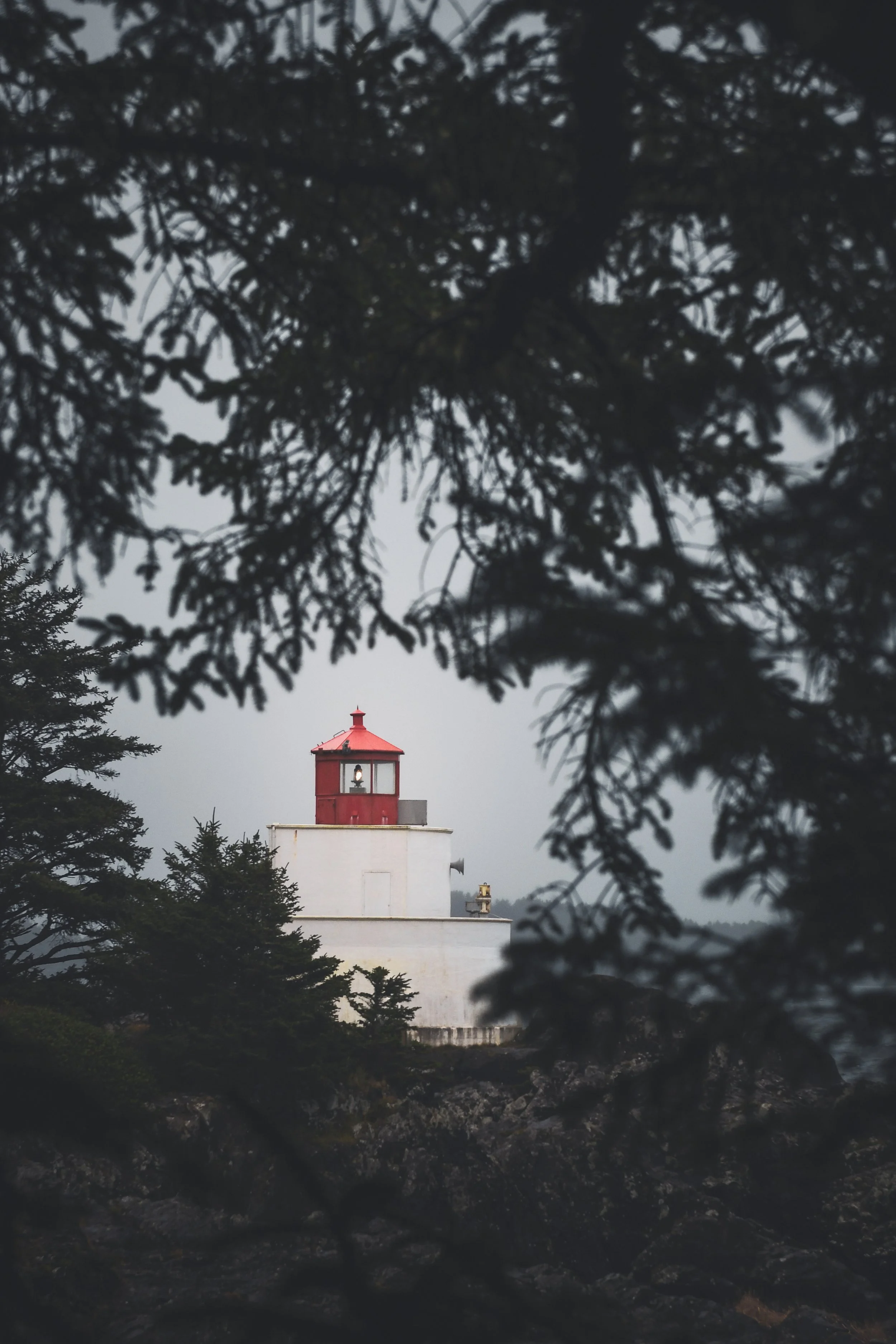
Beyond the lighthouse, the mostly-flat gravel trail winds through a temperate rainforest and past tiny viewpoints. Each break in the trees offers a new angle of how the land meets the sea. I took photo after photo, trying to capture the particular brand of beauty only found on the rugged end of the Pacific coastline: slate gray sea stacks, topped with pine or spruce trees, white foam breaking at the base.
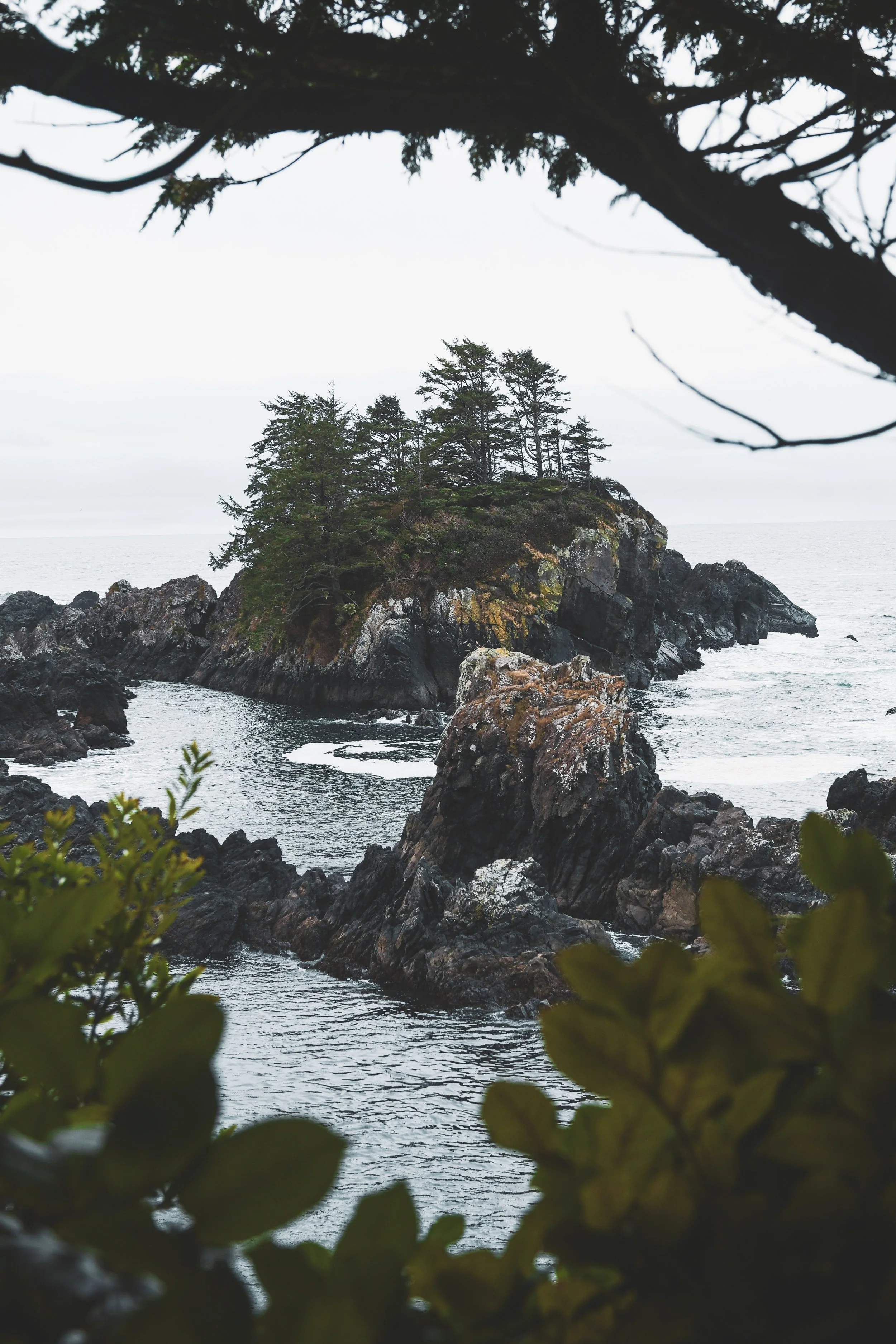
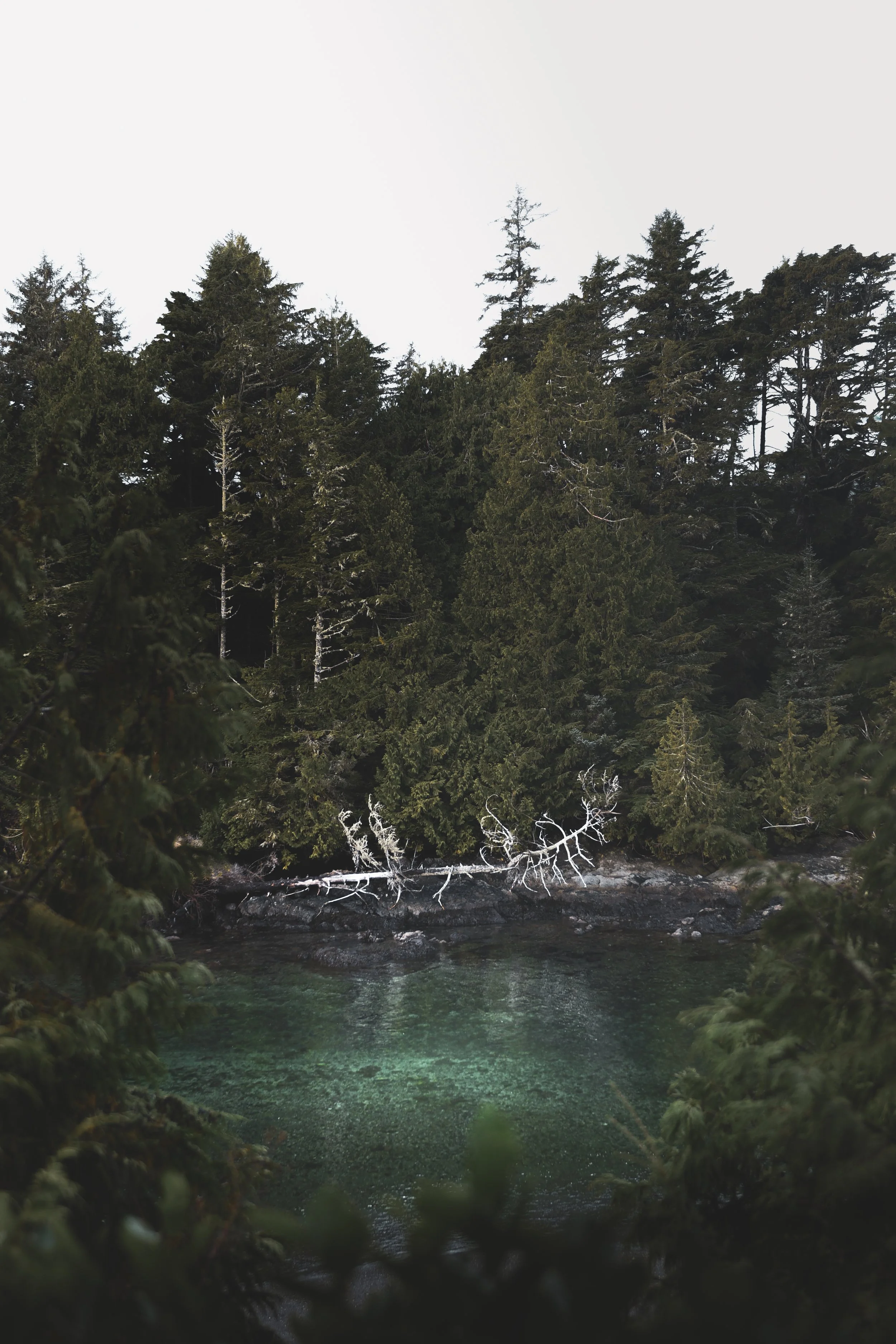
I stayed on the trail until the light was gone and my ISO was maxed out. Starving, I grabbed dinner at Shed, then went back to the Airbnb, exhausted but already looking forward to tomorrow.
The next morning, I woke up ready to explore more of Tofino’s beaches and the Pacific Rim National Park Reserve. With an iced coffee from Tofino Coffee Roasting Company in hand, I drove the short distance out of town and down a winding road until I reached a dead-end parking lot alongside Grice Bay. I’d read a few reviews of this place, some claiming it was nothing special. I have learned not to trust these types of reviews.
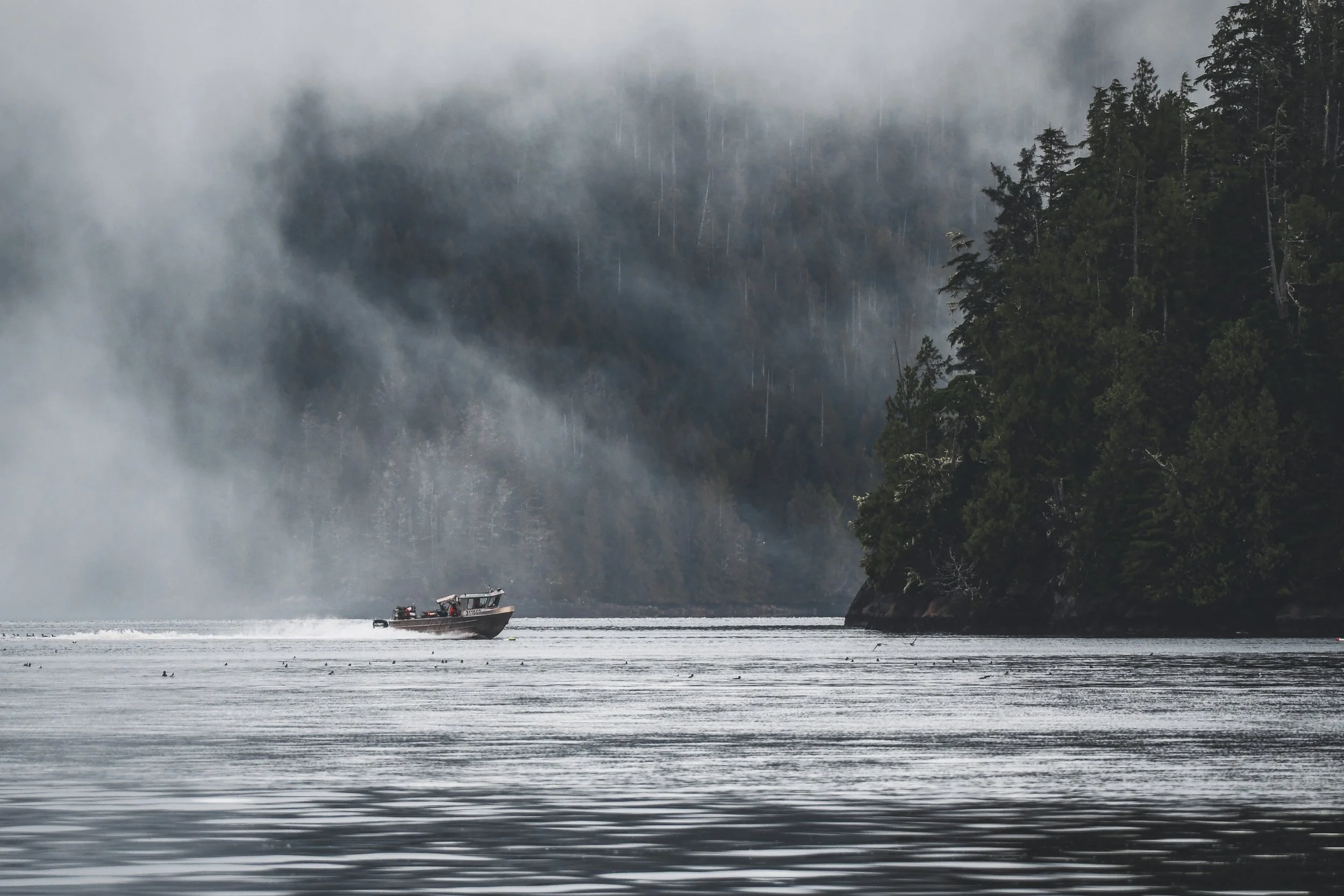
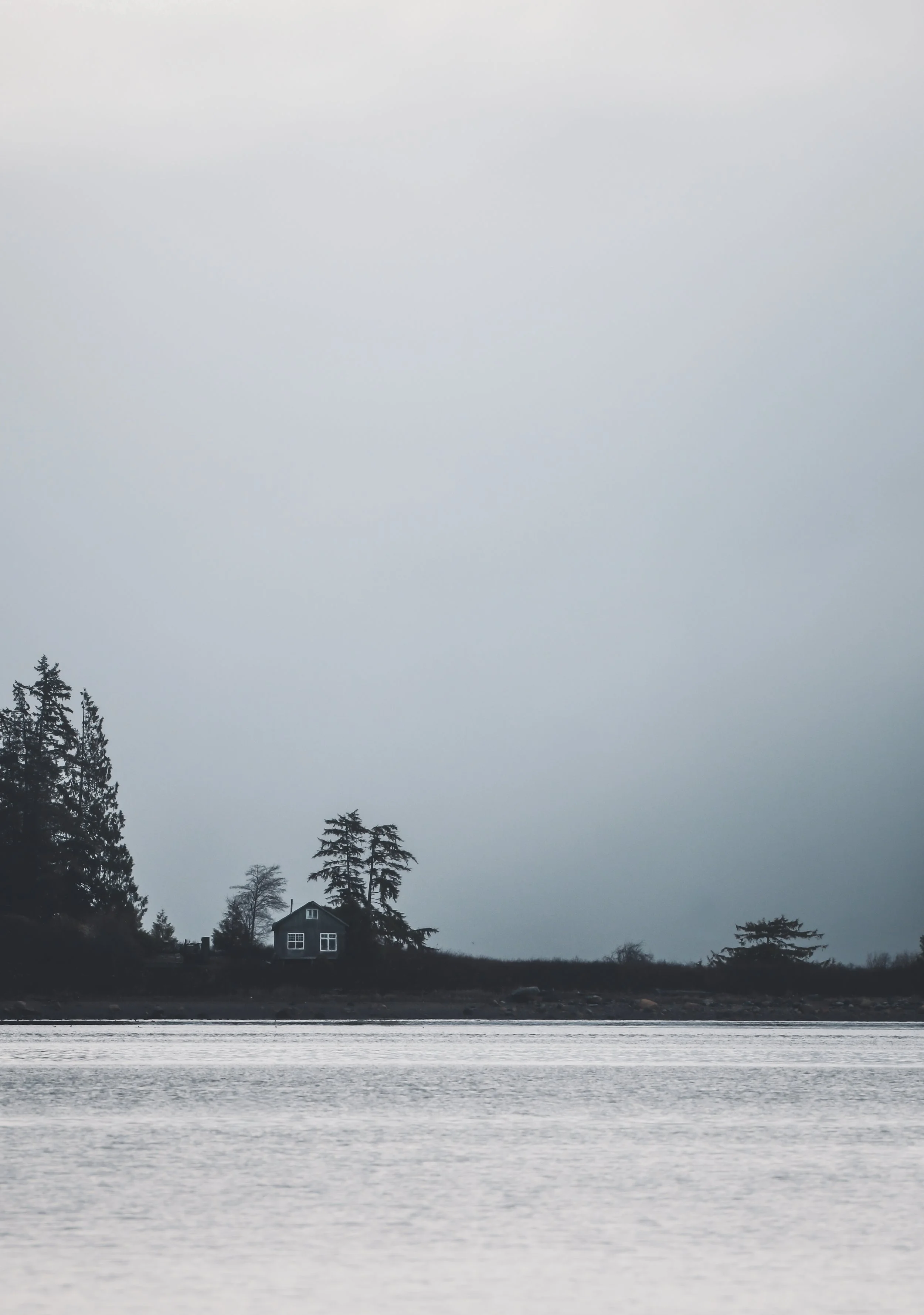
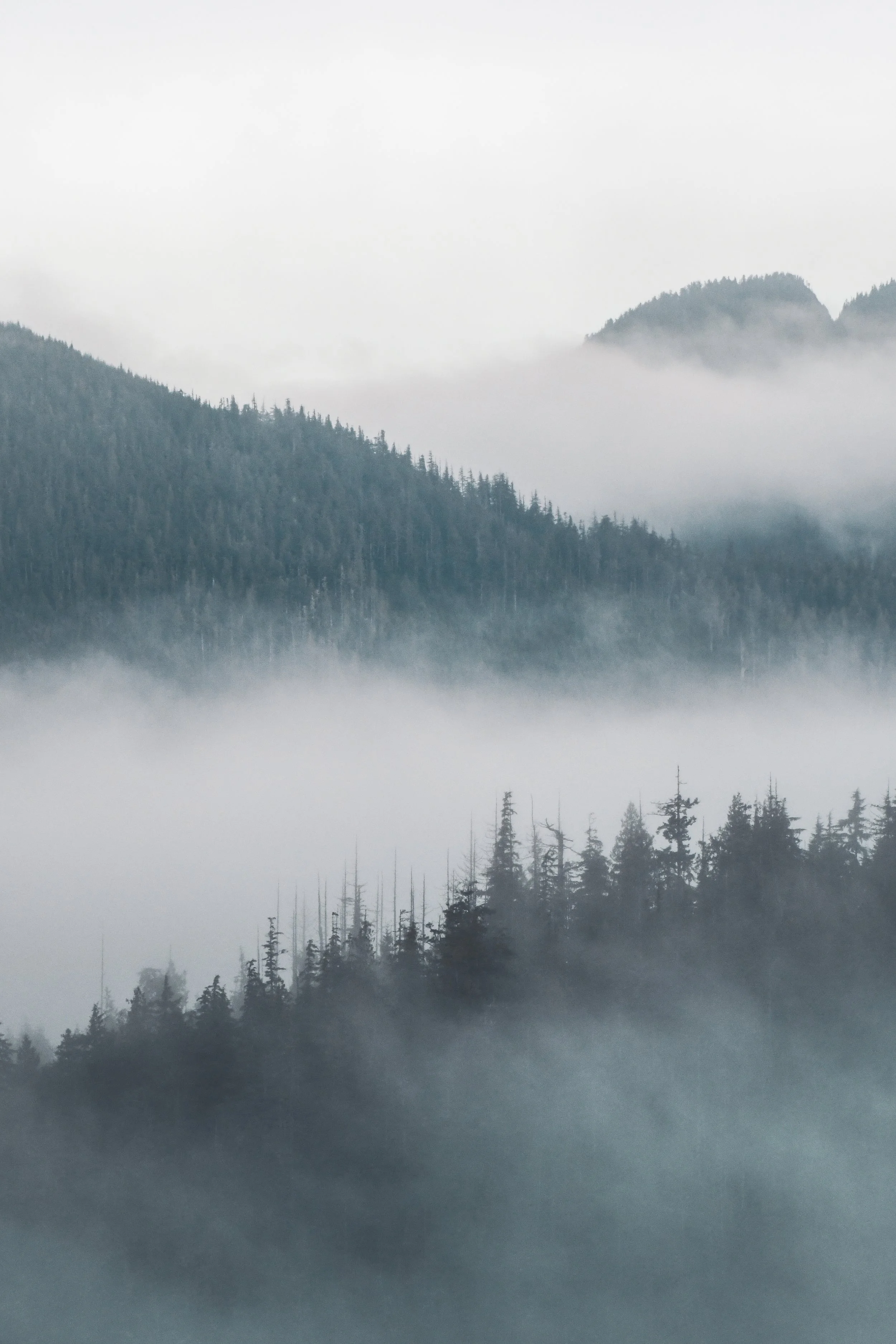
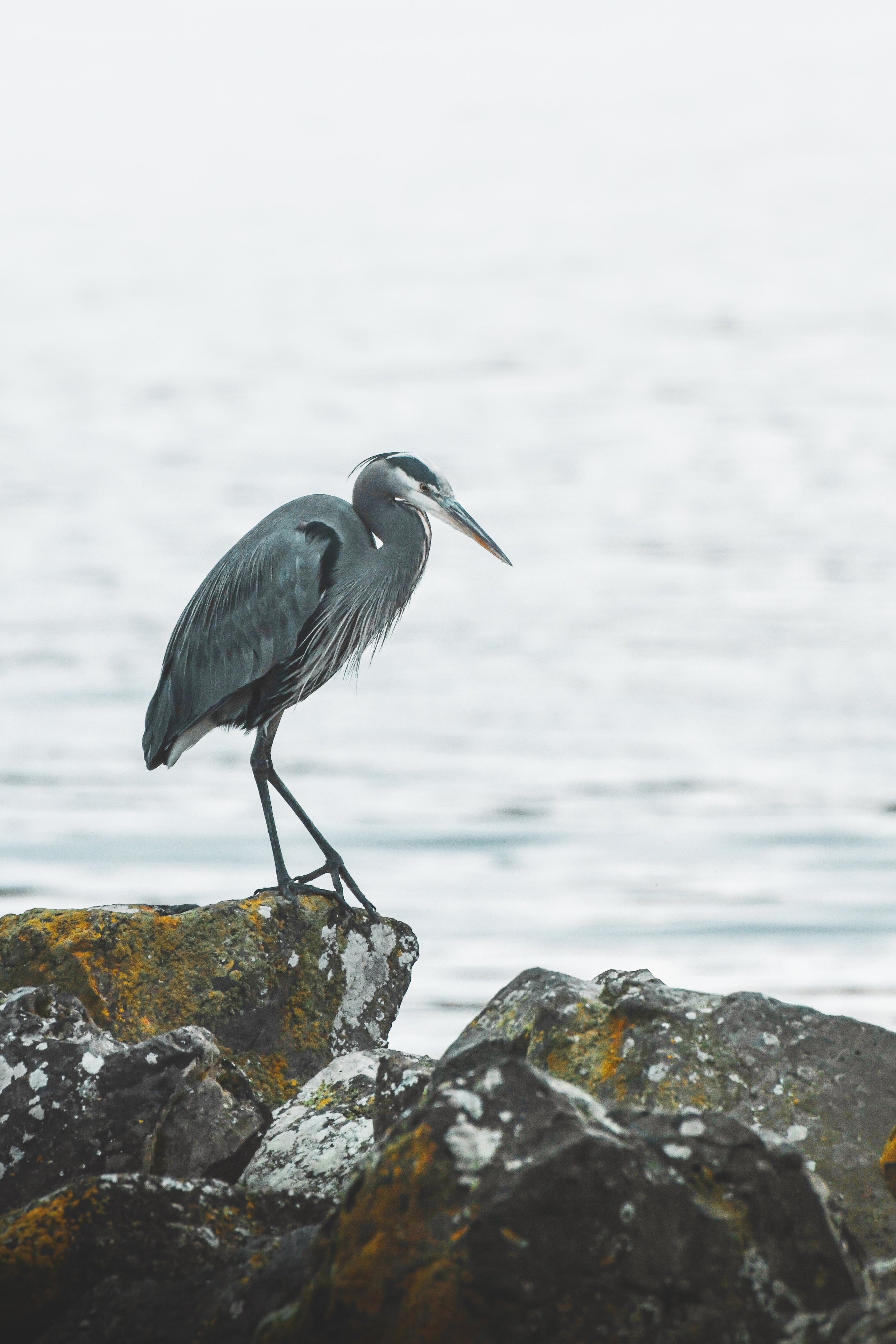
The early morning fog still hung low, drifting just above the surface of the water. Off in the distance, a bevy of swans took turns dunking their heads to find breakfast, and an eagle sat high up in a tree across the water. I was the only person I could see except for the fisherman in tugboats, racing from one end of the bay to the other with dozens of seagulls trailing close behind. Standing at the edge of the boat launch, I could not understand this place ever being categorized as nothing special. After snapping photos of the boats, a tiny cabin sitting on the opposite shore, and some layers of fog, it was time to leave.
Next, I went to Wickaninnish Beach, Combers Beach, Long Beach, and Incinerator Rock- all a part of the Long Beach Unit within Pacific Rim National Park Reserve. At this time of year, these signs were posted at all of the beach access points:
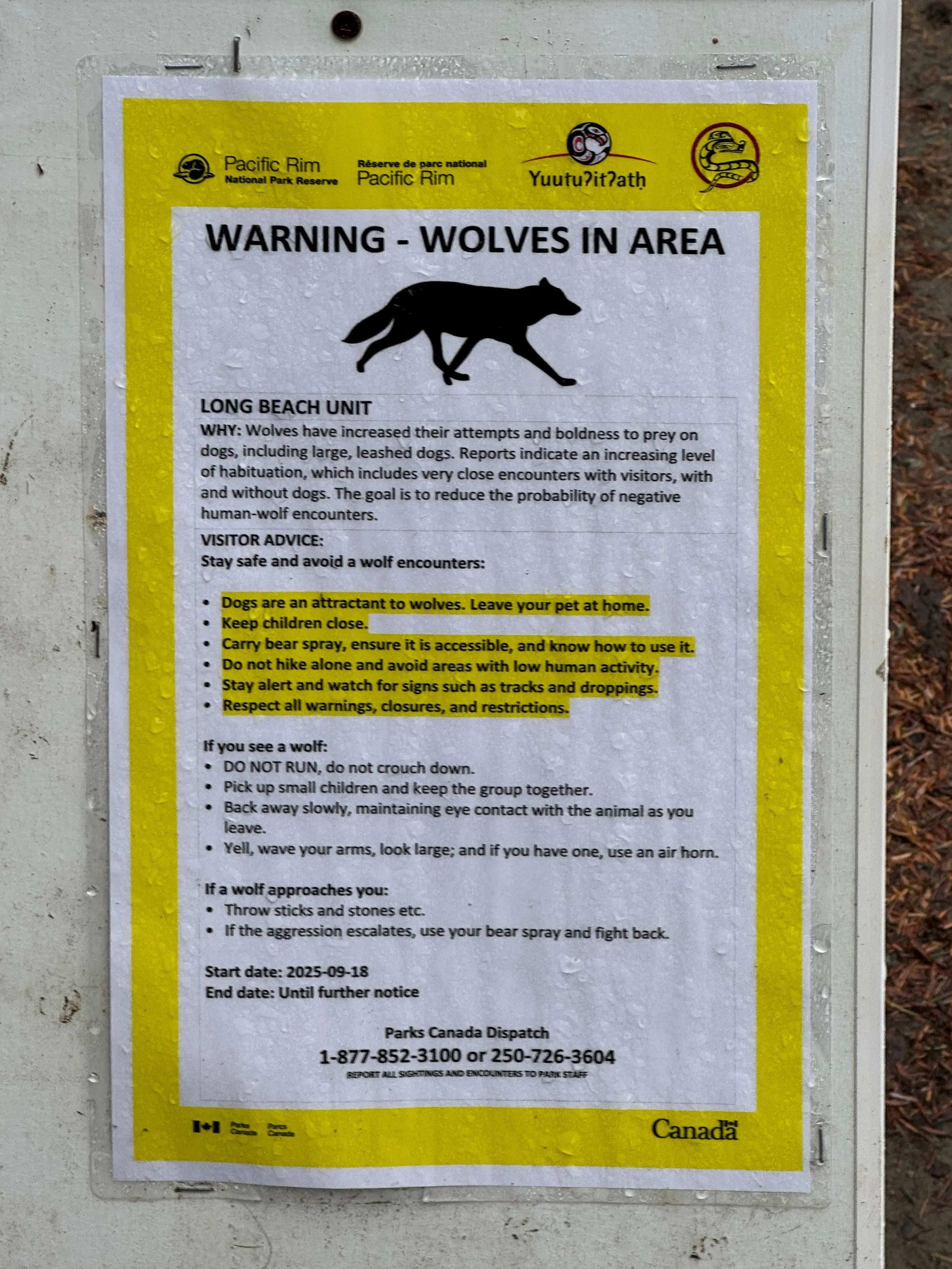
In all my years exploring the Oregon Coast, I’ve never had to consider the possibility that I would come across some kind of fierce predator. It was unsettling to think about. Up here, civilization exists on the outskirts of truly undeveloped, expansive wilderness. The houses, the people, the businesses are but tolerated, uninvited guests to all the native inhabitants.
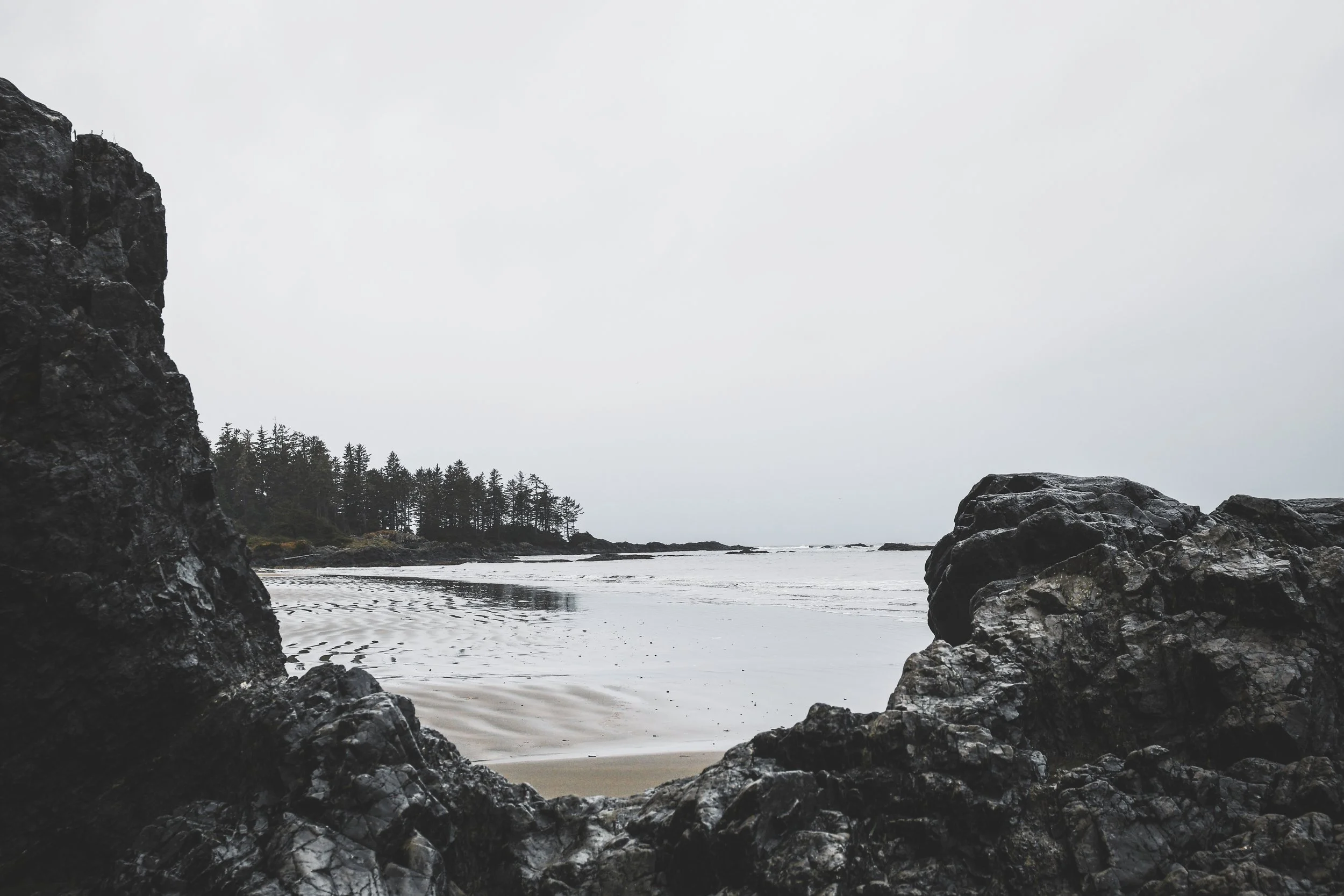
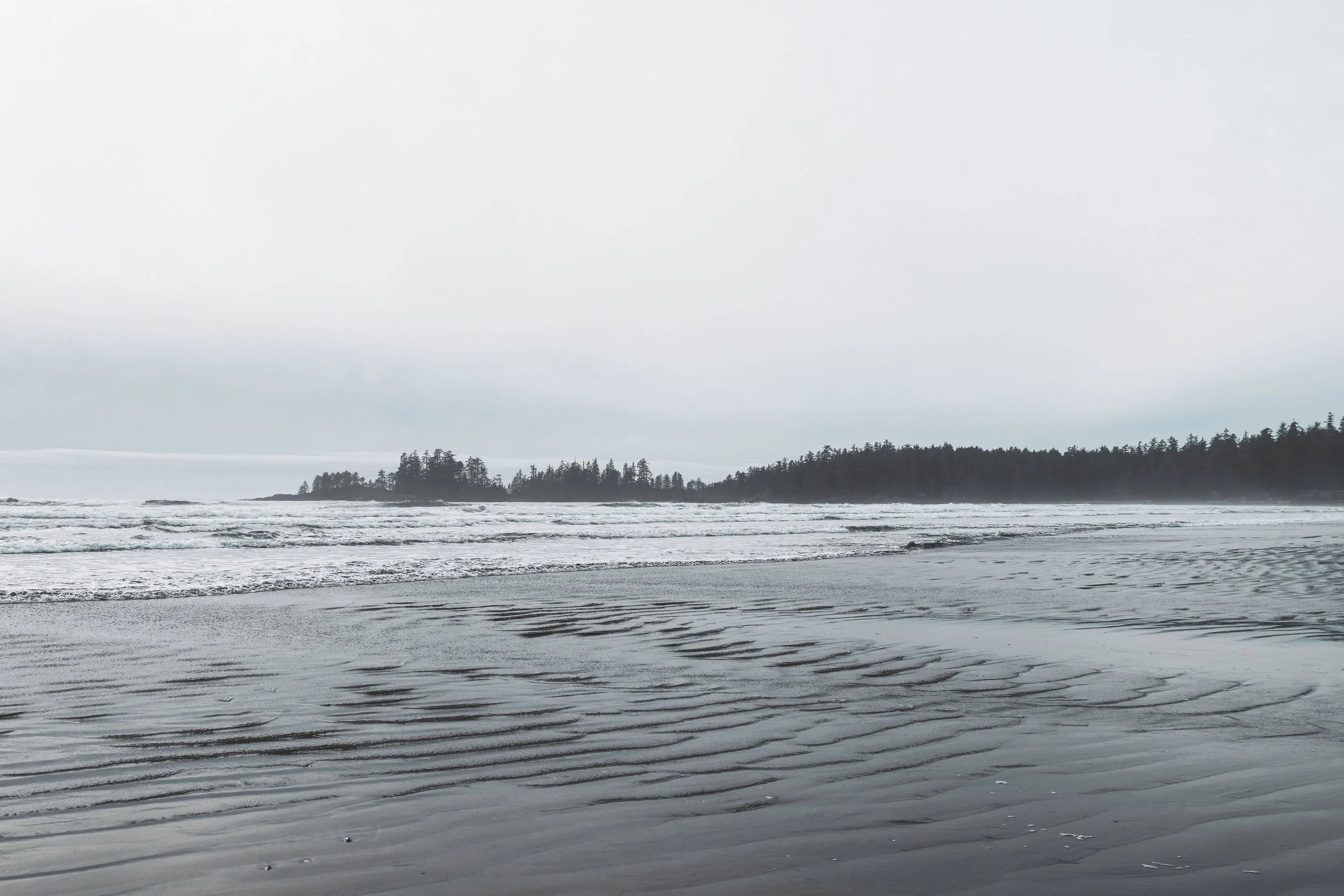
Each beach was not entirely empty, but close to it. Only those of us wrapped in waterproof coats and hiking boots dared to trek across the sand. The rain was coming down and the wind blew some of it sideways. Difficult, moody weather always feels so alive to me. It changes minute to minute, it requires forethought and patience, and it demands to be noticed. I’d choose it over routine sunshine almost any day.
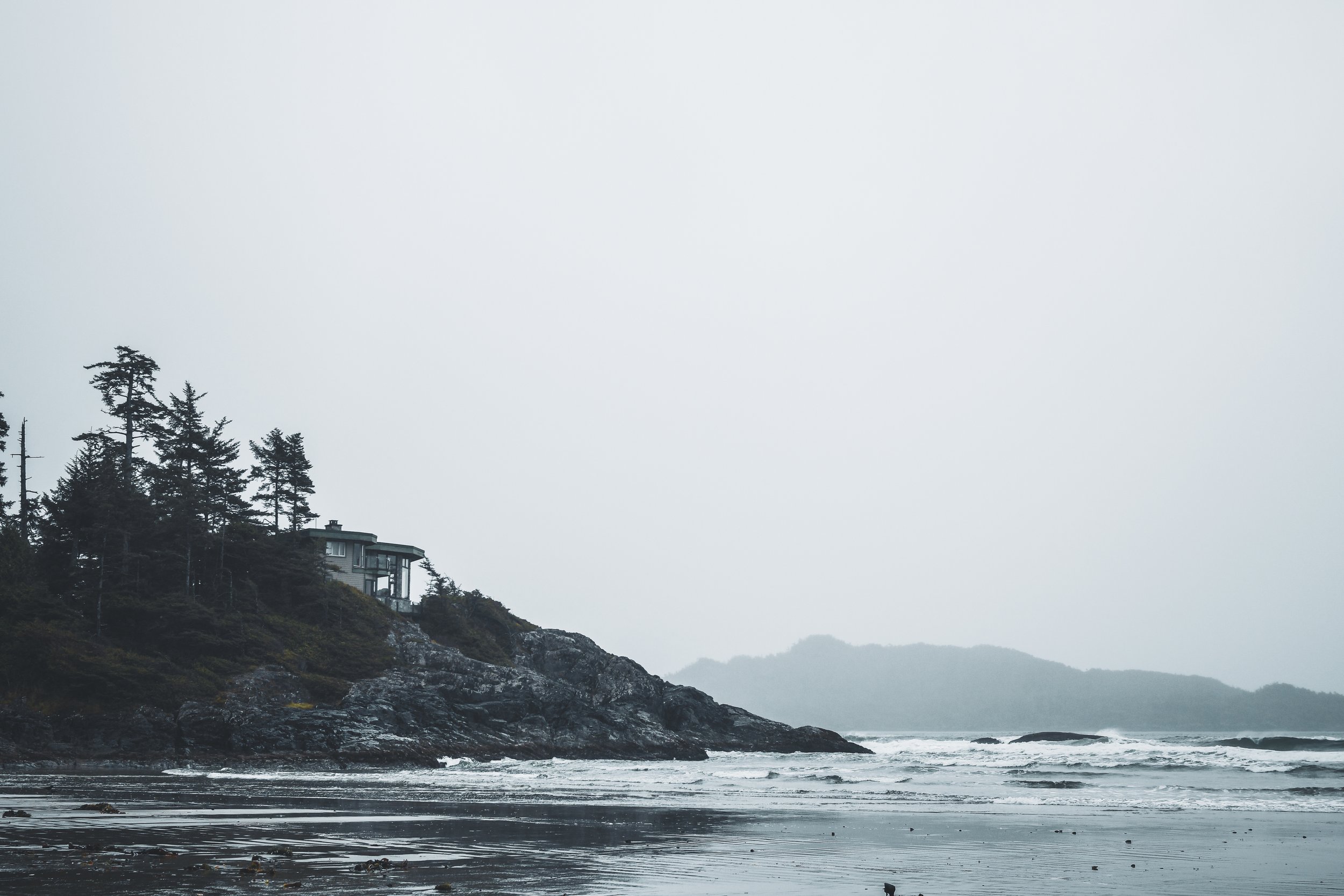
Back in Tofino, I stopped at South Chesterman Beach, walked for a few minutes, and enviously gawked at the homes overlooking the ocean. I loved the way this home was nestled in the rocks. It’s hard to tell, but there was a single light on in one of the windows— a lonely, warm beacon of light amidst a sea of cool tones.
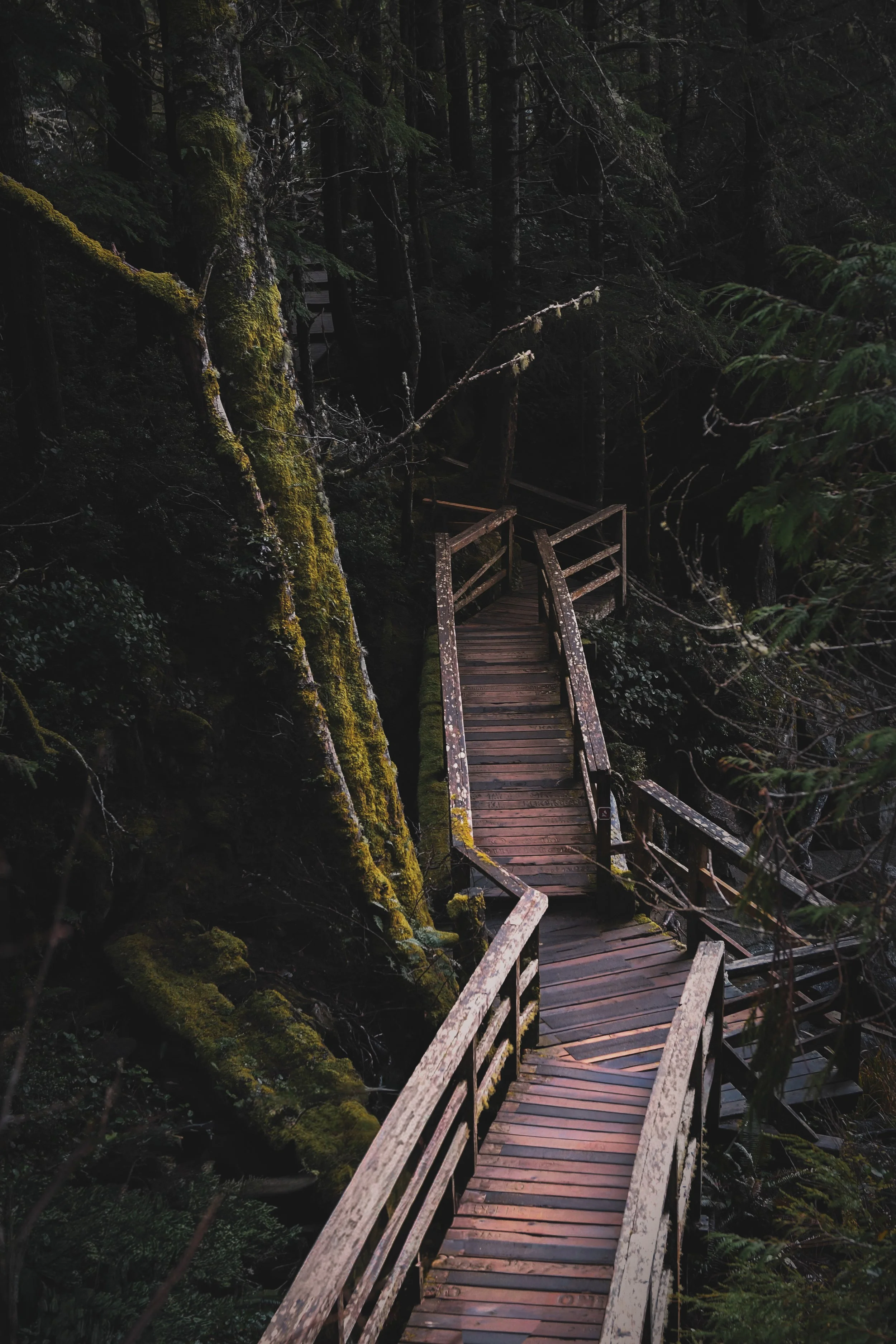
The rain let up and I ventured to the Tonquin Beach Trail. The trail stretches for about 2 miles along Tofino’s coastline. I did not have time to walk the entirety of the trail, but what I did see was beautiful. I was particularly struck by this wooden walkway.
Stretching an angular path between the trees, it felt like I’d arrived at the intersection of wilderness and human presence. Humans wedged this little bridge into the forest, no doubt an intrusion to the land beneath it, but in a way that attempts to respect the surrounding trees. The structure offers a way through, holding all of us just far enough back to keep the rest of the forest untouched. This is how we all must be when we are in the wilderness- respectfully coexisting with as little impact as possible.
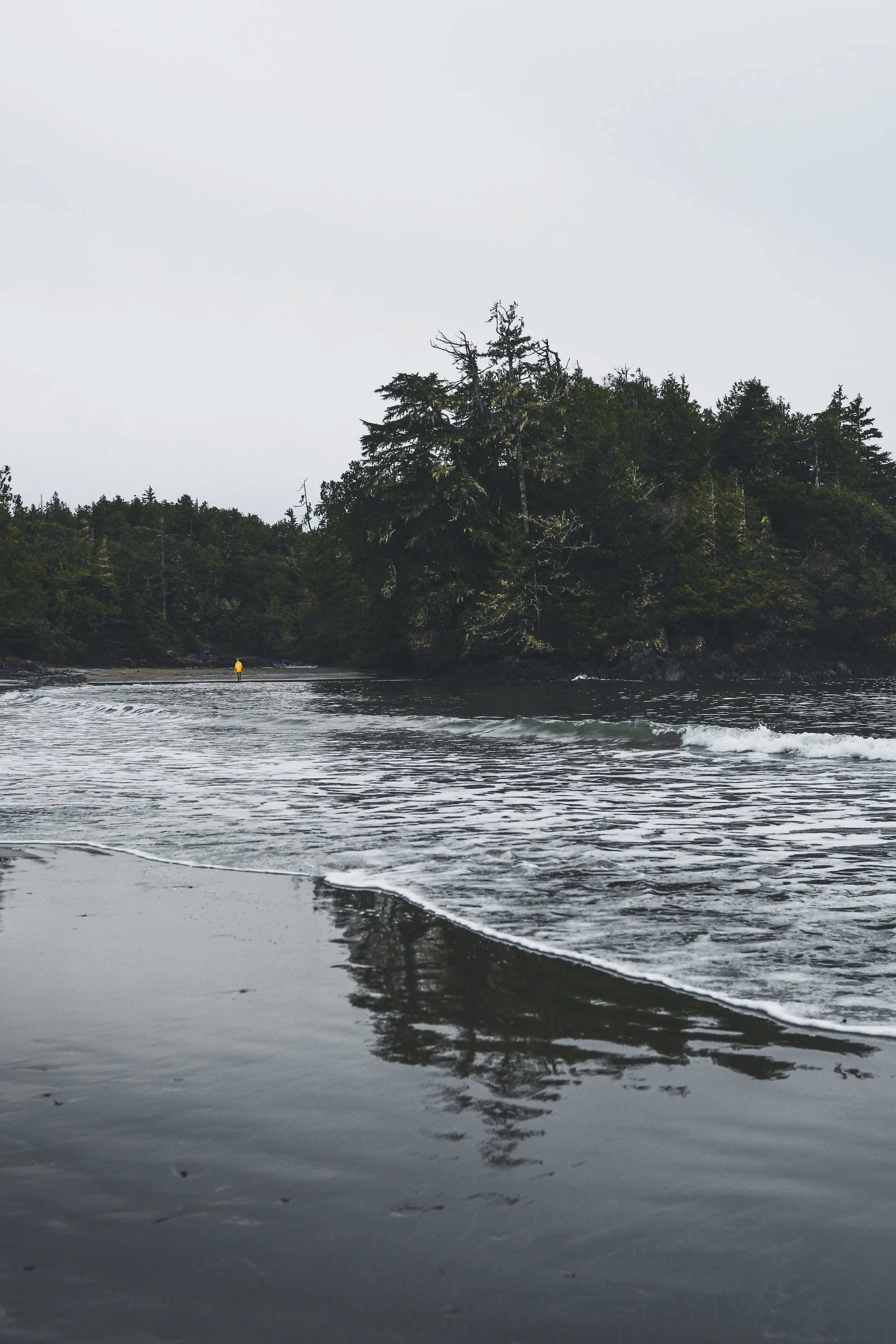
My last stop of the day was Tinwis Beach. Tinwis Beach sits behind one of Tofino’s many hotels. The hotel had Adirondack chairs, fire pits, string lights, all the beachy things right along the sand. Pretending like I belonged, I sat on one of their benches facing the ocean. Nearby, someone lit a fire in one of the pits and the scent of woodsmoke traveled my direction. That smell always brings me a strong sense of nostalgia.
I sat there thinking of all the women who’ve come before me. My mother, grandmothers, great, great, great, great grandmothers have never, could never, have been here. Not everyone, even my same age peers, have the distinct privilege, nor courage, to travel alone in their thirties—especially internationally. To be as free as I am, to have the resources I have, to be able to stand on my own in some of the most beautiful places on earth, is a blessing not lost on me.
Down the beach, a woman in a yellow rain coat walked in the surf. I wonder if she, too, was living out one of her dreams in that very moment.
While there was no sunset, I sat on the bench until after sundown and then left for dinner. Tacofino did indeed live up to the hype and I highly recommend.
The next morning, I walked down toward the water to take in all the blues, greens, and grays one more time. I leaned against the railing, let the salty wind meet my face, and inhaled. With the exception of the faint hum of a boat engine off in the distance, it was as quiet as the last few days had been. I thought back to the rocky beaches, the trees still standing after hundreds of years on this rugged coastline, the calm, but never still, water. Vancouver Island is a wild place, but it’s not aggressive or boisterous or loud. It’s a little mysterious, connected to something ancient, with an understated type of beauty. It’s a place I missed almost as soon as I left.
It’s a place that is a quiet kind of wild and I cannot wait to go back.
More Recs:
In addition to Tofino and Ucluelet, I spent time in Victoria, Sooke, and Port Renfrew as well. Here are a handful more recs:
Victoria:
- Parliament Building
- Royal BC Museum (this took far less time than I expected, but I am still glad I went)
- Craigdarroch Castle
In between Victoria and Tofino:
- Cathedral Grove
- Little Qualicum Falls
- Kennedy Lake Lookout (this is a quick roadside stop)
Sooke to Port Renfrew:
- Sheringham Point Lighthouse
- Fairy Lake Bonsai Tree
- Botanical Beach Provincial Park
*As a solo traveler on a budget, I tend to find Airbnb’s cheaper than hotels. I also recognize that Airbnb’s can put a strain on housing for locals. In this case, the Airbnb was a really comfortable unit attached to the owner’s home. It was very clean, in a convenient location, and perfect for 1 or 2 people- definitely recommend!